As an Amazon Associate, we earn from qualifying purchases. Some links on this site are affiliate links at no extra cost to you. Our recommendations are based on thorough research and editorial judgment.
Water Spray Techniques for Soft-Bodied Insects

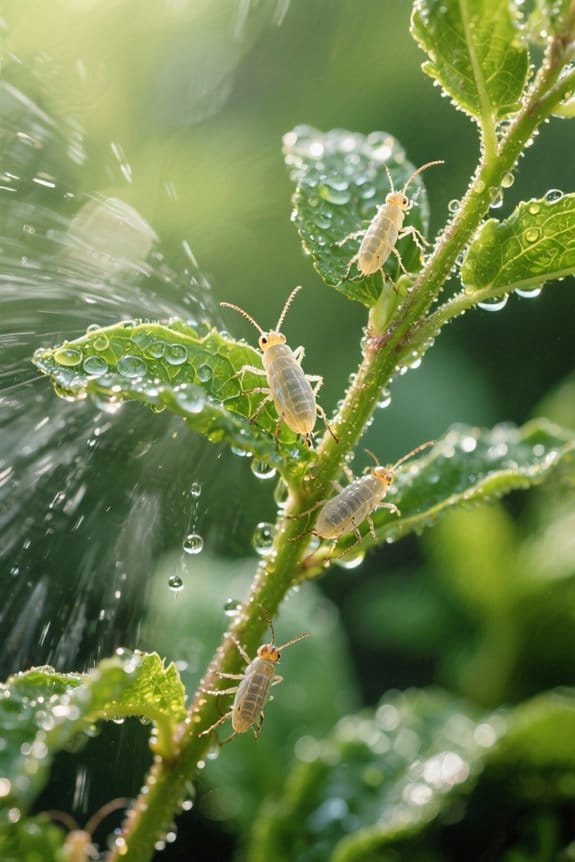
Water spray techniques are a simple, eco-friendly way to tackle soft-bodied insects like aphids and spider mites. Using a strong, fine mist, spray your plants in the early morning or late evening when temperatures are cooler. This helps dislodge pests while keeping your plants safe. Aim to soak the insects thoroughly without drowning the leaves. Regular monitoring is essential—detecting issues early can spare you a lot of frustration. There’s plenty more to discover about this effective method!
Key Takeaways
- Use fine mist sprays to effectively dislodge soft-bodied insects without harming plant foliage.
- Apply water sprays early morning or late evening to reduce plant stress and enhance coverage.
- Combine water sprays with homemade insecticidal soap for increased pest control efficacy.
- Ensure thorough coverage of infested areas, spraying every few days for ongoing management.
- Regularly monitor plants for early signs of pest presence to initiate immediate spraying.
Understanding Soft-Bodied Insects
Soft-bodied insects can be a gardener’s worst nightmare. These pesky pests, like aphids and spider mites, suck sap from plants, leading to weak growth and potential disease. They reproduce quickly, so early detection is key. You wouldn’t want an infestation to sneak up on you, would you? Regular monitoring helps catch these critters before they cause serious damage. Organic pest control methods are your best friends here. Consider using water sprays, which can dislodge those fragile little bodies from your plants. Remember, they don’t have armor, so a good blast can make a difference! Stay vigilant, and don’t let these nuisances ruin your garden dreams. With some effort, you can tackle soft-bodied insects and keep your plants thriving. Trifecta Crop Control is a natural, plant-based solution effective against aphids, spider mites, and whiteflies, with no chemical residues.
The Importance of Water Spray Techniques

A garden filled with vibrant plants should never be overshadowed by pesky invaders. Water sprays are a simple yet effective way to remove pests like soft-bodied insects, including aphids and spider mites. Regularly hosing down your plants in the morning or late evening can greatly improve pest control. It’s crucial to use a strong stream of water to reach those sneaky spots where insects hide. Not only do water sprays help dislodge unwanted pests, but they also keep dust and debris off plant surfaces, enhancing plant health and photosynthesis. Plus, they protect our little garden friends—beneficial insects—so you can enjoy a thriving, pest-free oasis. Remember, a little water goes a long way in garden happiness! Insecticidal soaps are an eco-friendly alternative that can be used alongside water sprays for effective pest management.
Benefits of Water Spray for Pest Management

Water spray techniques offer an incredibly effective tool in the battle against pesky garden pests. By simply blasting water, you can dislodge soft-bodied insects like aphids and spider mites from your plants. This method is organic, making it safe for the environment. Regularly spraying water not only washes away adult pests but also helps remove eggs and larvae before they become a bigger problem. Timing is essential; applying water sprays in the early morning or late evening minimizes plant stress and protects beneficial insects. Coupling water sprays with other pest management strategies keeps plants healthy and combats moisture stress. Eco-friendly options reduce chemical exposure for plants, pets, and humans, making them a great addition to any pest management routine. As the saying goes, “A little water goes a long way in the garden!” Embrace this eco-friendly approach for vibrant, pest-free plants.
How to Use Water Spray Effectively

When it comes to keeping those pesky insects at bay, using a water spray can make all the difference. Start by choosing a fine mist spray; a gentle mist will soak those soft-bodied pests without damaging your plants. Early morning is the best time, as cooler temperatures help reduce evaporation. You may want to mix your water spray with homemade insecticidal soap to strengthen the fight against pests in your garden. Regularly spraying helps not only reduce their populations but also keeps plants clean and healthy. Remember, a little pressure goes a long way, so soak those unwanted visitors! With a bit of persistence, you can foster a thriving, pest-free garden. Happy gardening! Consider using weather-resistant materials for your spray tools to ensure longevity and effectiveness in various environmental conditions.
Recommended Products

SUPER CONCENTRATE MAKES 1,000 GALLONS - Earth's Ally 3 in 1 Plant Spray Super Concentrate creates 1,000 gallons of multi-purpose pest and fungus spray that works as an insecticide, miticide and fungicide. The formula effectively controls insects and common plant diseases with a synergistic blend of botanical oils.

PROTECTS PLANTS FROM MOISTURE LOSS: Stops winter damage, reduces drought stress, planting/transplanting stress and more. Dries to a soft, flexible clear film to lock in moisture. Professional grade.

MAXIMIZE YIELDS – Grow healthier plants with Grower’s Ally Spider Mite Control. This natural miticide for spider mites kills and repels common soft-bodied insects, including adult and nymph spider mites.
Timing Your Water Spray Applications
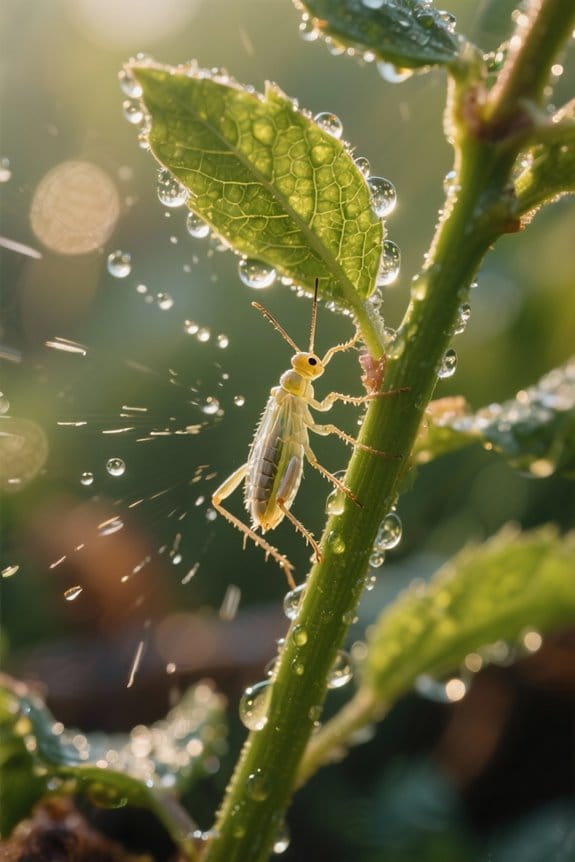
Timing is everything in the battle against soft-bodied pests. For effective water spray applications, choose early morning or late evening. This timing reduces evaporation and protects beneficial insects. Aim for cooler temperatures below 90°F (32°C) to ease stress on plants, enhancing pest removal effectiveness. Regular monitoring is key; keep an eye on your plants so you can spray as soon as you spot those pesky aphids or spider mites. Don’t forget to apply water sprays every few days, as new infestations can pop up unexpectedly. When you spray, guarantee thorough coverage of affected areas. Think of it as giving those stubborn pests a revitalizing shower—they don’t appreciate it, but your plants will thrive! Adding beneficial insects like Green Lacewings can further enhance your garden’s pest management strategy by targeting pests like aphids and spider mites, reducing the need for frequent water sprays.
Monitoring Pest Populations
Spotting those pesky pests before they take over is key to a healthy garden. Regular monitoring of pest populations, especially soft-bodied insects like aphids or spider mites, helps catch infestations early. You might use sticky traps or pheromone traps; these little wonders provide valuable data on pest numbers. Keep an eye out for signs of their activity during routine checks. Don’t forget those beneficial insects—they’re like the garden’s superheroes, keeping pests in check! Maintain detailed records of what you see. This information can reveal patterns and guide your future pest management strategies. Remember, a vigilant gardener is a victorious one! So, grab your notepad, and let’s keep that garden thriving. Consider using non-toxic options, like traps, to safely capture pests without the use of chemicals.
Combining Water Spray With Other Methods
While water sprays can stand alone as an effective tool for managing soft-bodied pests, they shine even brighter when paired with other methods. By utilizing a high-pressure water spray, you can dislodge pesky aphids or spider mites easily. Combine this with insecticidal soap, and you’ll create a potent pest management duo. The soap coats and kills any remaining pests that the spray misses. Regularly hosing down your plants not only rinses dust away but also promotes overall plant health. This can be part of your preventive strategy. Couple water spray with organic methods like companion planting to build a resilient ecosystem. Remember, a balanced garden flourishes while keeping those pests on their toes! Consider integrating neem oil sprays, as they are effective against various pests like aphids and spider mites, providing an additional layer of protection for your plants.
Recommended Products
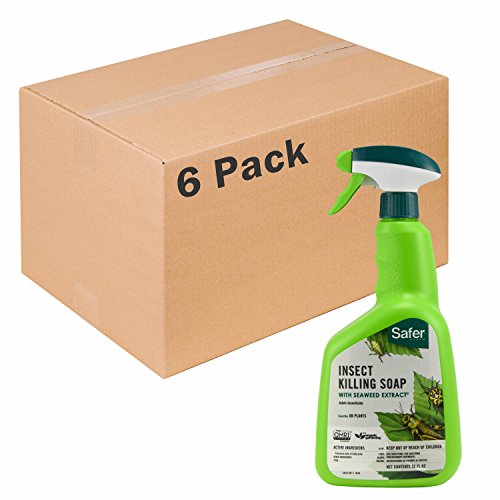
Targets & kills aphids, earwigs, grasshoppers, Harlequin bugs, leafhoppers, mealy bugs, mites, plant bugs, psyllids, sawfly larvae, soft scales, spider mites, squash bugs, blossom trips & whiteflies


LAB PROVEN TO KILL & REPEL BUGS. Plant powered pest protection with natural essential oils that works. This pest repellent spray is proven to protect your pets and family from mosquitoes, ants, ticks, fleas, and other common yard bugs. Meets the same effectiveness standards required for conventional flea and tick yard treatment and preventatives. An alternative to conventional pesticide sprays, baits, ant granules, zappers or foggers.
Organic Alternatives to Water Spray
Have you ever wondered what to do when water sprays just aren’t cutting it? Organic alternatives can be both effective and gentle! Homemade insecticidal soaps are a fantastic option. Just mix liquid castile soap with water to smother soft-bodied pests like aphids—without harming your beneficial insects. Garlic oil sprays can deter pests, thanks to their potent scent. Hot pepper sprays make use of capsaicin to keep unwanted critters at bay. And don’t forget about tomato leaf sprays; they ward off soft-bodied insects effectively—just avoid using them on other nightshade crops. White oil sprays, a mix of vegetable oil and soap, can also work wonders. Explore these non-toxic alternatives to protect your garden! Many organic pest control solutions utilize natural ingredients, making them safe for kids and pets while reducing environmental impact.
Plants Best Suited for Water Spray Techniques
When it comes to using water spray techniques, certain plants are definitely more suited for the job. Look for sturdy leaves like those on kale and collard greens. These tough guys can handle the pressure from a spray without wilting away. Infested plants benefit greatly from this technique, as it helps disrupt soft-bodied insects like aphids and spider mites. However, be wary of delicate-leaved plants such as ferns or young seedlings. They might not be as forgiving! The best time for spraying is during early mornings or late evenings. This timing is like hitting the sweet spot, avoiding sun exposure while effectively tackling pest populations. Remember, a little water goes a long way! For effective pest control, consider using fast-acting gels for other types of pests, as they reduce the need for multiple applications.
Recommended Products

𝐏𝐨𝐰𝐞𝐫𝐟𝐮𝐥, 𝐀𝐥𝐥-𝐏𝐮𝐫𝐩𝐨𝐬𝐞 𝐏𝐞𝐬𝐭 𝐂𝐨𝐧𝐭𝐫𝐨𝐥: Eliminator Insecticide and Fungicide Concentrate tough away and controls mildew, fungus, mold, aphids, spider mites, whiteflies, fungus gnats, thrips, mealybugs, flies, and more – ideal for gardens, crops, greenhouses, and residential spaces.

EFFECTIVE SPIDER MITE, POWDERY MILDEW & PLANT DISEASE CONTROL – Natural miticide and spider mite killer effective against two-spotted spider mites, broad mites, russet mites, whiteflies, aphids, powdery mildew, and downy mildew on vegetables, flowers, houseplants, indoor plants, ornamentals, and garden crops.

PROFESSIONAL-GRADE DEER & RABBIT REPELLENT — Commercial wildlife repellent trusted for forestry, vineyards, orchards, nurseries, agriculture, landscaping, and reforestation applications across Europe and North America
Common Mistakes When Using Water Spray
Using water sprays can be a fantastic way to keep soft-bodied insects at bay, but common mistakes often crop up. Overusing water can damage plant foliage and encourage fungal growth, especially in humid conditions. Remember to adjust the pressure; a gentle spray prevents dislodging beneficial insects. Timing is everything! Applying during hot sunlight can cause leaf burn. Opt for early morning or late evening instead. Be certain that you wet the insects’ bodies thoroughly; if they’re not soaked, your efforts may be wasted. Finally, don’t forget to repeat treatments! Regular monitoring and reapplication are key to keeping pest populations down. As they say, “A stitch in time saves nine!” So keep that garden growing strong! Additionally, attracting beneficial insects plays a crucial role in natural pest management by creating a balanced ecosystem where predators keep pest populations in check.
Best Practices for Maintaining Garden Health
How can gardeners guarantee their plants thrive while evading pesky insects? One key is regular inspections. Look for early signs of trouble. If trouble arises, water spray techniques can wash away soft-bodied pests like aphids. Maintaining healthy garden soil is essential too. Use compost and organic amendments to boost plant strength and pest resistance. Another tip? Try companion planting! It naturally wards off pests while inviting helpful buddies. Plus, remember to rotate your crops. This confuses the pests and disrupts their life cycles. Chemical treatments should be a last resort. With these practices, you’ll keep your garden vibrant and flourishing. Don’t let those pesky critters ruin your hard work—just think of them as “unexpected garden guests.”
Frequently Asked Questions
How to Make Bug Spray With Skin so Soft?
To create a homemade insect repellent, mix one cup of Skin So Soft with one cup of water. This natural bug deterrent can serve as a DIY bug spray, providing an effective alternative to harsher insect repellent recipes.
How Much Dawn Soap Do You Mix With Water for Insect Spray?
For effective pest removal, one to two teaspoons of Dawn soap should be mixed with one quart of water. This homemade solution demonstrates soap effectiveness and promotes insect safety through proper dilution methods and application techniques.
What Is a Soft Insecticide?
A soft insecticide is an eco-friendly insecticide designed for natural pest control, utilizing essential oils and homemade insect sprays. Its applications in biological pest management emphasize insecticide safety precautions and minimize harm to non-target organisms.
How Do You Make Soapy Water Spray for Aphids?
In a pinch, one can mix 1-2 teaspoons of mild soap with a quart of water for effective aphid control. This eco-friendly treatment serves as a natural repellent against garden pests using organic methods and soap solutions.


