As an Amazon Associate, we earn from qualifying purchases. Some links on this site are affiliate links at no extra cost to you. Our recommendations are based on thorough research and editorial judgment.

Composting Without Attracting Pests

Composting without attracting pests is absolutely achievable! Keep a balanced mix of materials, sticking to a carbon-to-nitrogen ratio of about 30:1. Avoid adding meat, dairy, and oils that tempt critters. Using a solid compost bin with a tight lid helps keep pests out. Also, regularly aerate your compost pile to create a less inviting environment for unwanted guests. Remember, a bit of diligence goes a long way. There’s plenty more to explore in making your composting hassle-free!
Key Takeaways
- Use a solid, sealed compost bin with tight-fitting lids to prevent pest access.
- Avoid composting meat, dairy, and oily foods to minimize odors that attract pests.
- Regularly aerate and turn the compost to maintain high temperatures and deter unwanted critters.
- Incorporate natural deterrents, like peppermint oil, to enhance pest prevention strategies.
- Position your compost bin away from dense vegetation to reduce pest habitats and opportunities.
Understanding the Composting Process
Composting is a simple yet fascinating process that anyone can master. At the core of composting are organic materials, like kitchen scraps and yard waste, that decompose aerobically. To get started, place these materials in a compost bin. The secret is achieving the right balance: a carbon-to-nitrogen ratio of about 30:1. This ratio keeps your compost healthy and minimizes unpleasant odors. Aim for a temperature of 130°F to 160°F during decomposition—think of it as a warm hug for the microbes! Remember to turn your compost regularly to aerate the pile and keep it active. Just like giving your plants a little TLC, your pile thrives on attention. Organic pest control solutions can be integrated into your gardening practices to maintain an eco-friendly environment while composting. So, roll up your sleeves and watch nature work!
Benefits of a Pest-Free Composting System

A pest-free composting system offers peace of mind, making the journey to rich, organic compost much smoother. By keeping pests away, you reduce the risk of attracting rodents and other unwelcome critters. This helps maintain compost integrity and health. Avoiding meat, dairy, and oily foods prevents odors that could lure vermin in. Turning your compost regularly keeps temperatures high, deterring pests while speeding up decomposition. A solid, sealed compost bin is key for proper aeration and moisture management, ensuring your compost remains effective. Try trench composting to enhance nutrient retention without inviting unwanted visitors. Implementing eco-friendly pest control solutions can further protect your compost by minimizing the attraction of unwanted pests. Remember, a healthy composting system not only enriches your garden but can be the joy of your household—without the surprise guests!
Key Materials to Avoid
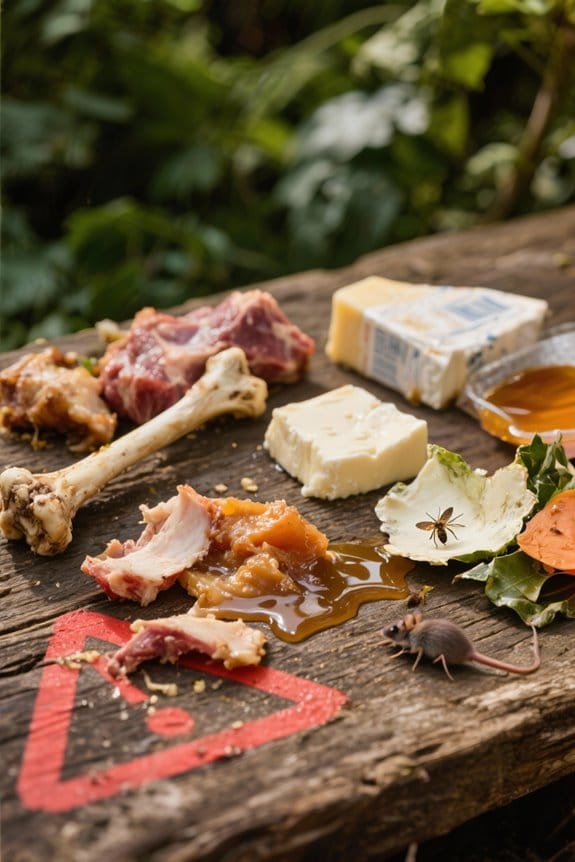
Maintaining a successful compost pile requires careful attention to the materials added. When adding food scraps, steer clear of cooked or processed items, especially meat and dairy. These can invite unwanted guests like rats or raccoons. Large quantities of citrus peels? Limit those too—their strong aroma can scare off beneficial microorganisms and bring in pests! Pet feces and diseased plant materials also belong in the trash, not the compost heap. They can spread pathogens and attract animals. And for heaven’s sake, avoid invasive plants; they may take over your garden. Finally, skip cardboard with ink or glossy finishes, as harmful chemicals could leach into your compost. A little caution leads to a thriving compost heap! Consider using natural pesticides to manage pests around your compost area, ensuring a safe and eco-friendly environment.
Effective Compost Bin Designs

Successful composting not only relies on what goes in, but also on how it’s contained. A solid-sided compost bin designed specifically for kitchen waste is ideal. Make sure it comes with a tight-fitting lid to keep pests at bay. Placing the compost bin on wire mesh with holes smaller than 15 mm is another smart move—this prevents rats from raiding your compost. Compost tumblers are great too, thanks to their sealed design and easy mobility, which help deter pesky vermin. Remember, regularly disturbing and aerating the compost heap creates an inhospitable environment for pests while promoting decomposition. Finally, maintain a balanced ratio of carbon to nitrogen, and steer clear of meat, dairy, and oily foods that attract unwanted visitors. Adding a natural rodent deterrent, such as peppermint oil repellent, around your compost area can further help in keeping rodents at bay.
Best Practices for Compost Maintenance

While it might seem intimidating at first, keeping a compost pile healthy and pest-free is easier than one might think. To maintain your compost bin, monitor the contents regularly. Avoid adding meat, dairy, or strong-smelling foods that attract pests. Aim for a balanced ratio of greens and browns, about 30:1, to support decomposition. Think of it as feeding your compost! Disturbing and aerating the pile frequently helps create movement, discouraging unwanted critters. Additionally, position your compost bin in an open area, away from dense vegetation. A tight-fitting lid guarantees pests stay out. Remember, a well-maintained compost pile is like a secret garden—full of life and only the good kind! For those seeking pest control solutions that avoid harmful substances, consider using ultrasonic technology to deter pests without chemicals.
Strategies for Rodent Prevention
Composting can be rewarding, but the thought of sharing space with pesky rodents can be intimidating. To keep them at bay, make sure your compost bin has solid sides and no gaps larger than 15 mm. This will limit rodent access. Placing your compost bin on a piece of wire mesh can also deter critters from sneaking in from below. Regularly turning the compost helps, too; rats prefer nice, cozy spots, and disturbance keeps it uninviting. Avoid tempting them with kitchen scraps like cooked food, meat, or fish. Finally, choose an open location for your compost bin, away from dense vegetation. Remember, a vigilant composter is a happy one—no rodent guests allowed! Incorporating natural deterrents like peppermint oil sprays can further discourage rodents from approaching your compost area.
Recommended Products

Time Saver - This tumbler composter is constructed for ease of use and simplicity of rotation. The Jora Composter acts as a compost turner which is simply turned by hand whenever waste is put in. The compost bin outdoor tumbler is divided into two chambers. While one compost container is being filled, the compost in the other chamber matures.

The most beautiful composter in the world. Produces solid and liquid compost.

Easier Composting: Separate bins and removable slats make harvesting finished compost easier
The Role of Aeration in Composting
Keeping your compost pile lively and productive hinges on one essential factor: aeration. Good airflow is important for thriving aerobic bacteria, which break down organic materials quickly. If you regularly turn your compost heap, you’ll boost aeration and increase temperatures, eliminating pesky weed seeds and pathogens. Without proper airflow, your compost bin could become compacted, leading to unpleasant odors and a magnet for pests. So, toss in some coarse leaves or straw to enhance aeration and maintain a balanced carbon-nitrogen mix. A well-aerated pile decomposes efficiently, making it less likely to attract unwelcome guests like rodents or flies. Remember, a healthy compost pile smells like earth, not a gym bag! Keep it airy, and your compost will thrive. Additionally, using organic insecticides and fungicides can help manage pest issues without harming the environment.
Utilizing Compost Tumblers for Success
Using a compost tumbler can be a game changer for anyone looking to compost efficiently without the headache of pests. These clever compost bins create a closed environment that keeps pesky rats and raccoons at bay. Plus, the tumblers encourage proper aeration, ensuring your compost breaks down efficiently while minimizing odors that attract unwanted guests. The rolling feature makes mixing easy—just give it a spin! Some models even boast tight-fitting lids and reinforced walls, making them nearly impervious to critters. With their compact design, compost tumblers are perfect for smaller yards too. Soon enough, you’ll be rewarded with nutrient-rich finished compost, perfect for your garden. As they say, “Good compost is like gold for your plants!” Additionally, using a non-aerosol spray can help deter pests further by creating an additional barrier without harming the environment.
Trench Composting as a Practical Solution
Have you ever wished for a composting method that was less work and more rewarding? Trench composting might be the answer. This method involves burying organic materials directly in the soil, which promotes fast breakdown. With no unsightly piles to turn, this low-maintenance option makes composting more enjoyable. Plus, since the scraps are underground, pests like rodents are less likely to be attracted to the site. It’s like putting a “Do Not Enter” sign on dinner! By burying scraps near where your plants will grow, you guarantee nutrients like nitrogen stay in the soil. So roll up your sleeves and dig in! Watching nature do its job can be both satisfying and effective. Additionally, using non-toxic solutions in and around your compost area can further deter pests, ensuring a clean and safe environment for your plants.
Recommended Products

Single Chamber Composter: 50-gallon tumbling chamber provides ample capacity in a compact footprint — simply add kitchen scraps and yard waste to being a composting cycle

Push & Tow Design: Our compost spreader can be used as a walk-behind unit or towed behind a tractor, ATV, or UTV using a 1" hitch pin. It features a 47.2" x Ø19.3" drum with a 7.2 cu ft capacity and 44" spreading width for yard and farm fertilizing tasks

Made with 3/4"-thick, sanded North American cedar boards
Regular Monitoring and Adjustments
Regular monitoring and adjustments can transform composting from a chore into a rewarding experience. Keep an eye on your compost bin for signs of pesky intruders, like droppings or burrow holes. Spotting these early can save you headaches later. If unpleasant odors pop up, it’s time for a little adjustment—mix in more brown materials to achieve that 30:1 carbon-to-nitrogen ratio. Don’t forget to turn your compost heap every few weeks; it’s like giving it a refreshing lift! Maintain moisture levels too; your compost should feel like a damp sponge, not a swimming pool. Finally, periodically remove any big food scraps. Keeping things tidy helps guarantee your compost remains a pest-free delight. Consider using ultrasonic pest repellers as a chemical-free solution to deter unwanted pests from your composting area.
Additional Resources for Successful Composting
While many may think composting is a one-size-fits-all endeavor, a few key resources can make the journey smoother and more enjoyable. Utilize closed compost bins or compost tumblers. These secure containers greatly reduce pest attraction. Keep a watchful eye on moisture levels; your compost should be moist but not a soggy mess. A balanced mix of carbon-rich browns and nitrogen-rich greens promotes healthy decomposition. And remember, avoid adding food scraps like cooked items, meat, and dairy. They’re like an all-you-can-eat buffet for critters! Place your bins away from dense vegetation and known rat pathways. This not only helps with pest control but also encourages the air circulation essential for successful composting. Happy composting!
Frequently Asked Questions
How to Compost Without Pests?
To compost without pests, employ aerobic composting techniques using a closed bin or tumbler, maintain a balanced carbon-to-nitrogen ratio, aerate regularly, avoid specific food scraps, and guarantee proper placement and protection from rodents.
Can I Compost Without Bugs?
Yes, one could compost without bugs by utilizing trench composting methods. For instance, a gardener successfully implemented this approach, attracting beneficial insects while minimizing unwanted pests through balanced greens and browns and regular aeration.
What Compost Bins Do Not Attract Rodents?
Enclosed bins, such as compost tumblers and those used for worm composting, effectively deter rodents. Their tight-fitting lids and sealed designs create an environment unsuitable for pests, promoting efficient decomposition while minimizing rodent attraction.
What Are Two Mistakes That We Should Avoid When We Prepare Compost?
Like a recipe for disaster, neglecting the proper carbon to nitrogen balance often leads to poorly decomposed compost. Additionally, overlooking the need to bury food scraps deep invites unwelcome pests seeking easy meals.