As an Amazon Associate, we earn from qualifying purchases. Some links on this site are affiliate links at no extra cost to you. Our recommendations are based on thorough research and editorial judgment.

Understanding Slug and Snail Behavior Patterns

Slugs and snails are clever little creatures with impressive survival tactics. They use camouflage, blending into brown leaves and soil to stay safe. When danger approaches, they quickly retract into their shells or hide under rocks. Their thick shells provide protection, and some even secrete a defensive mucus that can irritate predators. While they can seem slow and vulnerable, their smart behaviors keep them alive. If you’re curious about their roles in the ecosystem, there’s much more to explore.
Key Takeaways
- Slugs and snails utilize defensive mucus that irritates predators and aids in movement, enhancing their survival strategies.
- Their behavior includes rapid withdrawal into shells when threatened, providing immediate protection from danger.
- They exhibit cryptic coloration and camouflage by blending with their environment to avoid detection by predators.
- Inactivity during daylight hours helps conserve energy and reduces the risk of predation in these vulnerable moments.
- Certain species have the ability to regenerate their shells, allowing them to recover from predator encounters and maintain defense.
Adaptations for Survival
Slugs and snails have some remarkable tricks up their sleeves for survival. These creatures have developed impressive adaptations for survival. For instance, their defensive mucus can deter hungry predators by being irritating or sticky. It’s like a slippery “stay away” sign! If danger comes, slugs retract into their shells or find high spots to stay hidden. Speaking of shells, land snails often have thickened shells providing robust physical protection. What’s even cooler is their ability to regenerate. If a shell gets damaged, they can repair it, much like fixing a dent in a car. With their brown or tan colors, slugs and snails effectively camouflage themselves. Who knew that critters that seem so simple could have such fascinating survival skills? Many gardeners utilize eco-friendly traps to manage slug populations without harming the environment.
Camouflage and Cryptic Coloration
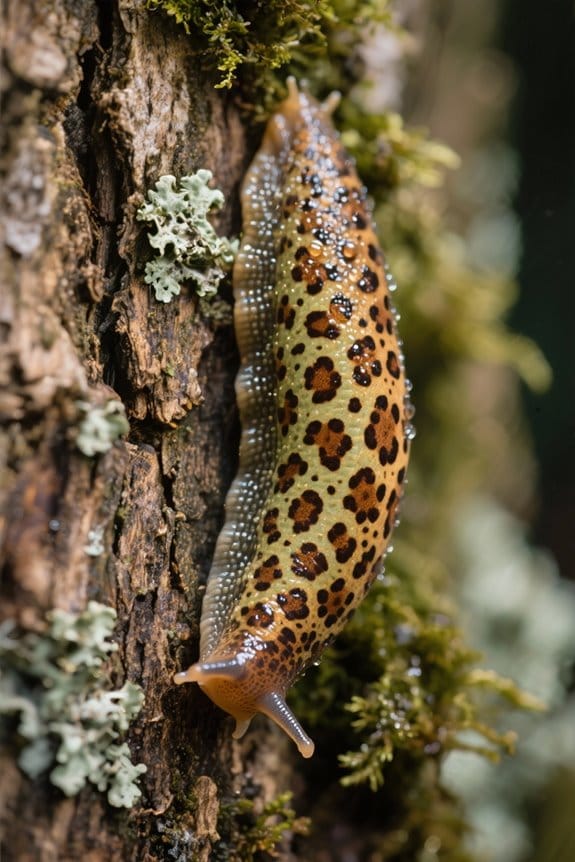
In the world of slugs and snails, camouflage and cryptic coloration play pivotal roles in their survival. Land snails are masters of blending in. They showcase brown and tan shades that allow them to hide among leaves and soil. Some even grow hair-like processes that absorb dust, giving them added stealth. During the day, they nestle into crevices or under rocks—talk about a cozy hideaway! When danger lurks, they have quick reflexes, retreating into their shells at lightning speed. These clever behavioral adaptations help reduce predation. Think of them as nature’s stealth ninjas, using their looks and behaviors to stay safe. A key strategy for protecting gardens from these stealthy creatures is using OMRI Listed products that ensure compliance with organic gardening standards. So, the next time you spot a snail, remember, it’s not just a slowpoke; it’s a camouflage champion!
Defensive Strategies Against Predators

Every snail and slug has an impressive arsenal of defensive strategies to protect themselves from hungry predators. They rely on defensive mucus, which can irritate and repel potential attackers. Who wants a taste of something that doesn’t just taste bad but smells worse? Additionally, many land snails sport thickened shells that serve as tough barriers during predator attacks. Cryptic coloration helps them blend into their surroundings, making it hard for predators to spot them. When danger approaches, these cunning creatures also showcase rapid withdrawal behaviors, quickly retreating into their shells to avoid becoming dinner. Remarkably, certain species can even regenerate damaged shells, keeping their defenses ready for the next encounter. Talk about bouncing back stronger! To further ensure their safety, some gardeners use organic solutions like diatomaceous earth to create protective barriers against these persistent mollusks.
Withdrawal and Mucus Secretion
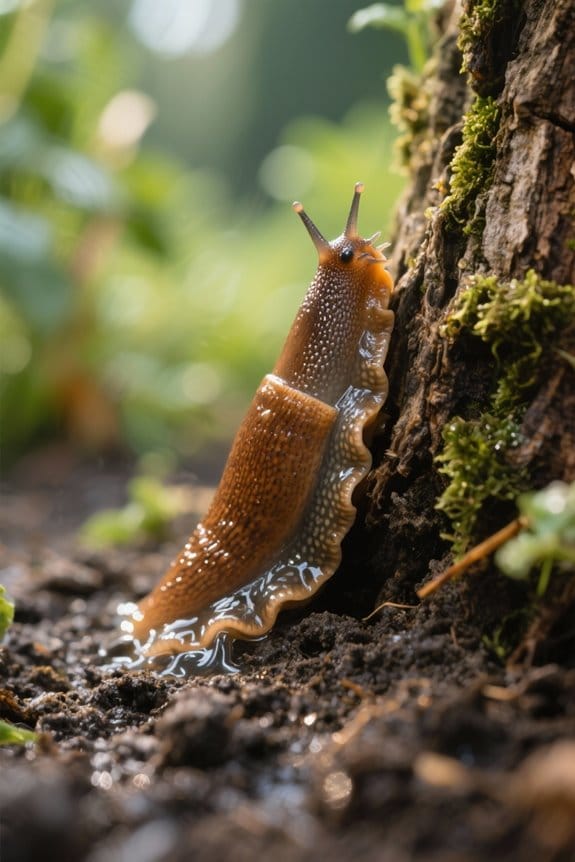
When facing threats, snails and slugs have their own clever ways of staying safe. These terrestrial gastropods quickly withdraw into their shells or bodies, providing instant protection from predators. In addition to this withdrawal, they employ mucus secretion, which aids in their defense mechanisms. This slimy substance can contain irritating odors and tastes to keep potential attackers at bay. Mucus also serves a dual purpose by providing camouflage and reducing friction during movement across surfaces. Some slugs even create barriers with their mucus when under attack, showcasing their adaptive strategies. By mastering these tactics, snails and slugs demonstrate impressive survival skills in the wild—who knew being a little slimy could be so smart? Interestingly, certain snail killers, such as those containing iron phosphate, offer a safe and effective means of pest control without harming wildlife.
Inactivity and Vulnerability

Periods of inactivity play a significant role in the lives of slugs and snails, impacting their vulnerability to predators. These moments can seem unexciting, but they are essential for survival. Terrestrial slugs often retreat into hidden spots when sensing danger. This behavior increases their vulnerability, making them prime targets for hungry predators. During the day, snails cling to their shells, avoiding the heat and drying sun. Their inactivity helps them conserve energy and stay safe, like a well-cooked noodle hiding in a cupboard. Some land snails even grow hair-like processes on their shells. These little guys gather dust, boosting their camouflage. Inactivity isn’t just downtime; it’s a clever protective strategy against the wild world out there! Introducing beneficial insects like ladybugs can help manage pest populations, reducing the threat to slugs and snails without relying on chemical pesticides.
Ecological Roles and Interactions
Inactivity might seem like a slug’s and snail’s way of napping, but there’s much more happening beneath the surface. These remarkable creatures serve crucial ecological roles as decomposers. Slugs and terrestrial snails break down organic matter, facilitating nutrient recycling in soil. Without them, nutrients would stagnate, leaving gardens hungry for sustenance. They also play a part in the food web, providing meals for birds and insects. You might hear gardeners grumble about slugs devouring their plants, but remember, these critters also improve soil structure and gardening health. They thrive in moist, nutrient-rich environments, often signaling soil significance. Embracing slugs and snails can help nurture a balanced ecosystem, proving that underestimating them is a slippery slope! Additionally, using OMRI-listed organic baits can ensure safe slug and snail control while preserving beneficial wildlife and maintaining ecological balance.
Frequently Asked Questions
What Are the 5 Characteristics of a Snail and Slug?
Both snails and slugs, nature’s soft-bodied marvels, share five key characteristics: shell structure—external for snails, internal for slugs; mucus production; diverse feeding habits; reproductive systems; and habitat preferences, emphasizing moisture and comfort for survival.
What Is the Behavior of Slugs?
Slugs exhibit nocturnal movement patterns, favoring damp habitats. Their feeding habits focus on vegetation, while mating rituals may involve unique pheromone releases. They hibernate during adverse conditions, seeking shelter in organic matter or underground.
How Do I Know if My Snail Is Unhappy?
An unhappy snail resembles a wilted flower, retreating into its shell. Signs of snail stress manifest in habitat preferences, erratic feeding habits, and lackluster mating rituals, underscoring the environmental impact on its well-being.
What Do Snails Do When Stressed?
When stressed, snails exhibit hiding habits, triggered by environmental changes. Their stress response includes decreased feeding, increased mucus secretion, and lethargy, emphasizing how stress impacts their behavior and overall health in challenging conditions.


