As an Amazon Associate, we earn from qualifying purchases. Some links on this site are affiliate links at no extra cost to you. Our recommendations are based on thorough research and editorial judgment.


Molasses Trap Recipes for Grasshoppers

Creating molasses traps for grasshoppers is simple and effective! Start with a mix of 10 parts water and 1 part molasses in a deep container. Add a squirt of liquid dish soap to stop them from escaping. Place your traps where grasshoppers love to sunbathe, and keep them refreshed every few days for better luck. Remember, these traps don’t just catch grasshoppers; they’re eco-friendly and harmless too! Stick around, and you’ll uncover even more handy tips.
Key Takeaways
- Mix a strong solution of 10 parts water to 1 part molasses in a deep container to attract grasshoppers.
- Add a few drops of liquid dish soap to the solution to break surface tension and prevent pest escape.
- Place traps in sunny areas where grasshoppers are active for maximum effectiveness.
- Refresh the molasses solution every few days to maintain its attraction and effectiveness.
- Consider using yellow containers, as their color may enhance trap effectiveness against grasshoppers.
Understanding Grasshopper Behavior
Understanding grasshopper behavior is key to effective pest management. These pests thrive in warm, sunny weather, making mornings and evenings the best times for grasshopper control. You might notice them jumping around during the heat of the day, but they are more vulnerable when temperatures drop. They find the sweet scent of molasses irresistible, a feature that can enhance your traps. Grasshoppers lay their eggs in clusters that hibernate through winter. Once spring arrives and soil warms to 50°F, those eggs hatch. Population surges in early summer can wreak havoc on your crops. By observing their habits and venturing into their preferred habitats, you’ll better position your traps for effective grasshopper control. Remember, like a wise farmer once said, “Patience pays in pest management.” Utilizing beneficial insects enhances sustainable gardening practices and reduces the reliance on harmful chemical pesticides.
Benefits of Using Molasses Traps

The use of molasses traps offers several benefits for anyone grappling with a grasshopper invasion. These traps are like sweet sirens, enticing grasshoppers with their delicious scent. A strong molasses solution can effectively drown these pests, making it a humane option. What’s great? Molasses traps don’t just target grasshoppers; they can also catch other pests attracted to sugary smells. This method is eco-friendly and saves you from chemical pesticides that harm your garden and the planet. Plus, building molasses traps is easy and often uses items you already have around the house. So, why fight grasshoppers with frustration when a little sweetness can turn the tide? Remember, sometimes a touch of sweetness is all you need to tackle pesky problems! Many organic pest control solutions, such as Diatomaceous Earth, are also effective yet safe options for pest management, providing a secure environment for both pets and kids.
Ingredients Needed for Molasses Traps
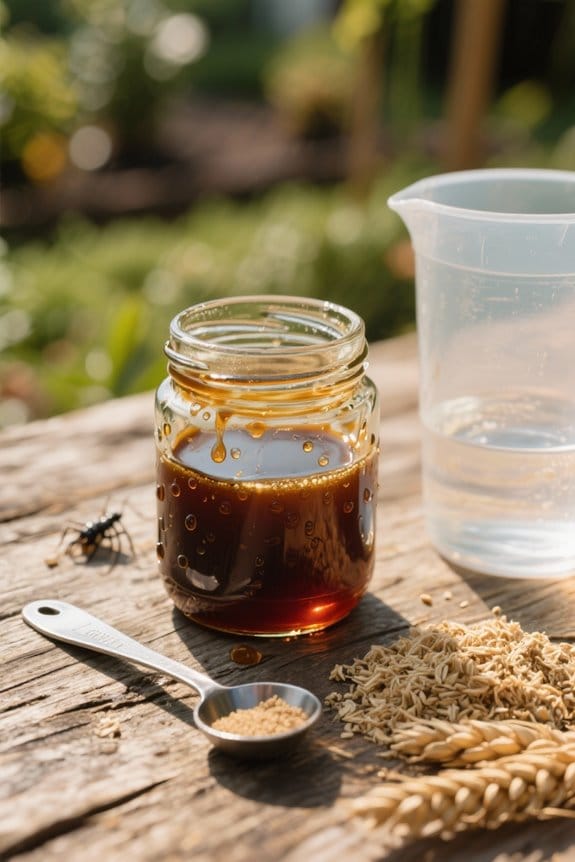
Creating molasses traps to catch grasshoppers doesn’t have to be complicated. Start with a strong solution of 10 parts water to 1 part molasses. You can use human food-grade molasses for a powerful mix, but general-grade molasses from pet stores works just fine, too. It’s the budget-friendly option! For added effectiveness, a few drops of liquid dish soap can be mixed in. This breaks the surface tension, making it harder for grasshoppers to escape. Place the traps in sunny spots where grasshoppers love to hang out, ensuring they’re visible. Organic pest control methods, such as using molasses traps, help reduce chemical residues on plants, ensuring safer gardening practices. Remember to refresh the traps regularly, especially after rain—like folks say, “A good trap is like a fresh pie; it’s best when it’s served warm!” Happy trapping!
Recommended Products

Certified Organic Blackstrap Molasses
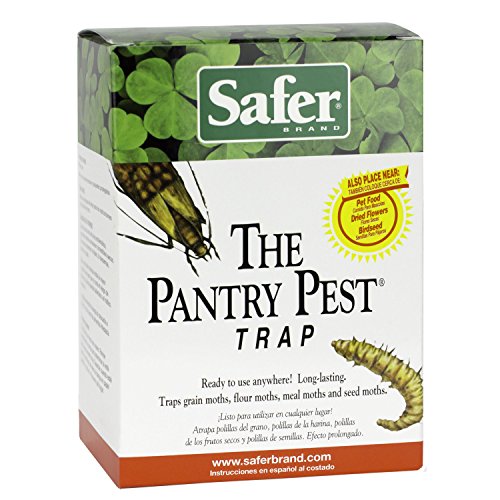
Controls Pantry Moths - Attract and trap adult pantry moths including grain moths, flour moths, meal moths, and seed moths

Blackstrap Molasses Unsulfured: Provides calcium, magnesium, potassium, and iron per tablespoon, making this iron rich molasses a flavorful pantry staple
Step-by-Step Instructions to Create Traps

Making molasses traps for grasshoppers can be a straightforward and rewarding project. Begin by mixing 10 parts water to 1 part molasses in a container. Verify the container is deep enough for those pesky grasshoppers to drown. Place your trap in sunny areas where grasshoppers actively roam, as this attracts them with a delightful aroma. For even better results, using yellow containers can help since grasshoppers are drawn to that brilliant color! Regularly check your traps and refresh the solution every few days. Just think, while grasshoppers lay their eggs elsewhere, you can keep them from multiplying in your garden. By staying on top of it, you can outsmart those hopping nuisances and enjoy a lovely pest-free space! If you’re considering other pest control methods, affordable bug bombs might be worth exploring for a comprehensive solution.
Recommended Products
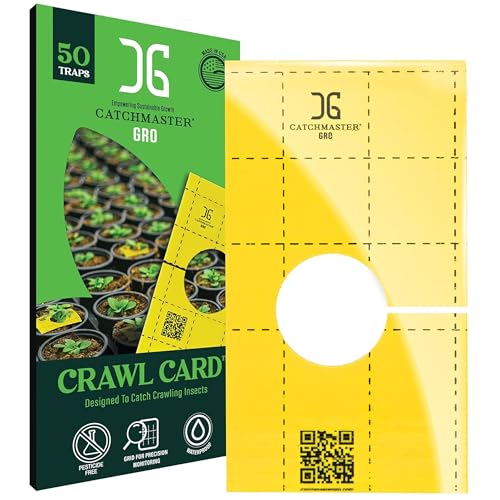
READY TO USE: Catchmaster Pre-Cut Ready to Use Sticky Traps are intended for use without fly bait. The bug catcher helps protect live plants from Fungus Gnats, White Flies, Fruit flies, Fungus Gnats, Aphids, Thrips, Leaf Miners, Sciarid Flies & more. Crawl Cards are designed for up to one year of use, depending on the environment they are placed

Baked Enamel Sheet Metal: Excellent weather resistance, waterproof and rust protection, solid and durable. The thick material allows it to work in all soil types, including loess and sandy soils.

Effective Bug Catcher 50 Pack Sticky traps. Specially designed for flying plant pests. Great for outdoor plant or houseplant.
Location Tips for Optimal Trap Placement

Choosing the right location for molasses traps can make a significant difference in capturing grasshoppers effectively. Look for spots with high grasshopper activity, like gardens or tall grasses. Timing matters too! Set your traps early in the morning or late in the evening when these little jumpers are feeling sluggish. Positioning traps in sunny areas can help, as grasshoppers love warm, bright places. Remember to place them near food sources like apple slices or lettuce, enticing grasshoppers with a snack before their dip in parts water. Keep an eye on your traps and move them as needed to follow grasshopper feeding patterns. You’ve got this—just think of the traps as fishing lines for lawn pests! Incorporating beneficial insects like Ladybugs can also support your pest management strategy by naturally reducing pest populations without chemical interventions.
Maintenance and Monitoring of Traps
Maintaining and monitoring molasses traps is essential for a successful grasshopper catch. Check the traps daily to avoid decomposing grasshoppers that can attract even more pests. Replenish the molasses solution as needed, keeping that 10:1 water to molasses ratio to keep grasshoppers interested. If you see more hopping around the nearby plants, adjust your trap placement to increase your catch. Be sure to clean out old molasses and debris after each use, so your traps stay in tip-top shape. It’s like keeping a fishing net clean; otherwise, you might end up with more weeds than fish! Finally, keep a record of how many grasshoppers you catch to fine-tune your strategy. Using natural insecticidal soaps can complement your trapping strategy by targeting other pests in the garden. Happy trapping!
Alternative Eco-Friendly Pest Control Methods
While monitoring molasses traps is one way to tackle grasshopper issues, there are also other eco-friendly pest control methods to evaluate. Consider introducing natural predators like birds or ground beetles, which feast on grasshopper eggs and nymphs. Plant aromatic herbs such as basil and marigolds to make your garden smell less appealing to these pests. Roto-tilling your soil in spring is a clever way to disrupt grasshopper eggs. Don’t forget beneficial insects like ladybugs too! They munch on various pests, keeping the chemical use low. Ultimately, for a quick fix, mix soapy water in a spray bottle and apply it to affected plants. It’s an old gardener’s trick that can work wonders! Additionally, utilizing eco-friendly options such as Wondercide or STEM Plant-Based Bug Spray can help manage pests safely, ensuring the safety of pets and children without harming the environment.
Recommended Products

SUPER CONCENTRATE MAKES 1,000 GALLONS - Earth's Ally 3 in 1 Plant Spray Super Concentrate creates 1,000 gallons of multi-purpose pest and fungus spray that works as an insecticide, miticide and fungicide. The formula effectively controls insects and common plant diseases with a synergistic blend of botanical oils.

𝐏𝐨𝐰𝐞𝐫𝐟𝐮𝐥, 𝐀𝐥𝐥-𝐏𝐮𝐫𝐩𝐨𝐬𝐞 𝐏𝐞𝐬𝐭 𝐂𝐨𝐧𝐭𝐫𝐨𝐥: Eliminator Insecticide and Fungicide Concentrate tough away and controls mildew, fungus, mold, aphids, spider mites, whiteflies, fungus gnats, thrips, mealybugs, flies, and more – ideal for gardens, crops, greenhouses, and residential spaces.

BEST NATURAL SOLUTION TO DEFEAT MILDEW, MITES AND MOLD - Crop Control is hands down the BEST choice to prevent and cure Powdery Mildew, Spider Mites, Russet Mites, Broad Mites, Botrytis, Grey Mold, Aphids, fungal and parasitic species on plants. Uses plants natural defense systems to defend with zero harsh chemicals or toxins.
Community Experiences With Molasses Traps
Many gardeners have found success with molasses traps in their fight against grasshoppers. Community members report a 10:1 water to molasses ratio effectively attracts these pests. The sweet scent draws them in, where they ultimately drown in the solution. Many users liken this method to beer traps for slugs, celebrating its non-toxic approach. Some have even experimented by mixing molasses with essential oils for an enhanced lure. Timing is essential, especially during the early nymph stages when grasshoppers are more vulnerable. Trap placement also matters—a shaded area or near feeding spots boosts catch rates considerably. As one gardener put it, “It’s like a sweet buffet for grasshoppers!” With a bit of strategy, success is just a trap away.
Encouraging Sustainable Gardening Practices
To create a thriving garden that works in harmony with nature, adopting sustainable gardening practices is essential. These practices, like using molasses traps for grasshoppers, offer a sweet way to manage pests without chemicals. Invite beneficial insects by using companion planting; aromatic herbs keep critters at bay and nature buzzing. You might even say they’re the garden’s “bodyguards.” Keeping your garden clean and maintaining healthy soil makes plants more resilient, too. Plus, sharing these tips through community groups turns pest problems into fun group projects. When everyone chips in, success is sweeter than the molasses traps! So, roll up those sleeves, embrace the outdoors, and watch your garden flourish with natural harmony. Incorporating eco-friendly pest control solutions, like ultrasonic technology, can further reduce environmental impact while ensuring safety for pets and children.
Frequently Asked Questions
How to Make a Molasses Trap for Grasshoppers?
To make a molasses trap for grasshoppers, mix water with molasses in a shallow container, then position it in high-traffic areas. This guarantees trap effectiveness by luring grasshoppers with its sweet scent and bright color.
How to Make a Homemade Grasshopper Trap?
To create a homemade grasshopper trap, mix water and molasses, utilize yellow containers, or craft a funnel trap. Setting traps strategically enhances trap effectiveness, particularly when targeting areas with noticeable grasshopper activity.
What Is the Best Bait for Grasshoppers?
The best bait for grasshoppers includes ripe fruits and sweet food items. Natural repellents can be used alongside these baits to deter unwanted insects while effectively attracting grasshoppers to the traps. Regular replacement maintains effectiveness.
Does Molasses Attract Grasshoppers?
Molasses undeniably attracts grasshoppers, capitalizing on their natural behavior. The sweet aroma lures them in, effectively exploiting their feeding instincts. Grasshopper behavior showcases their penchant for sweet substances, making molasses an appealing bait choice.